How to See Your Real Capacity
*(Not Your Potential)*
Yuki Tanaka
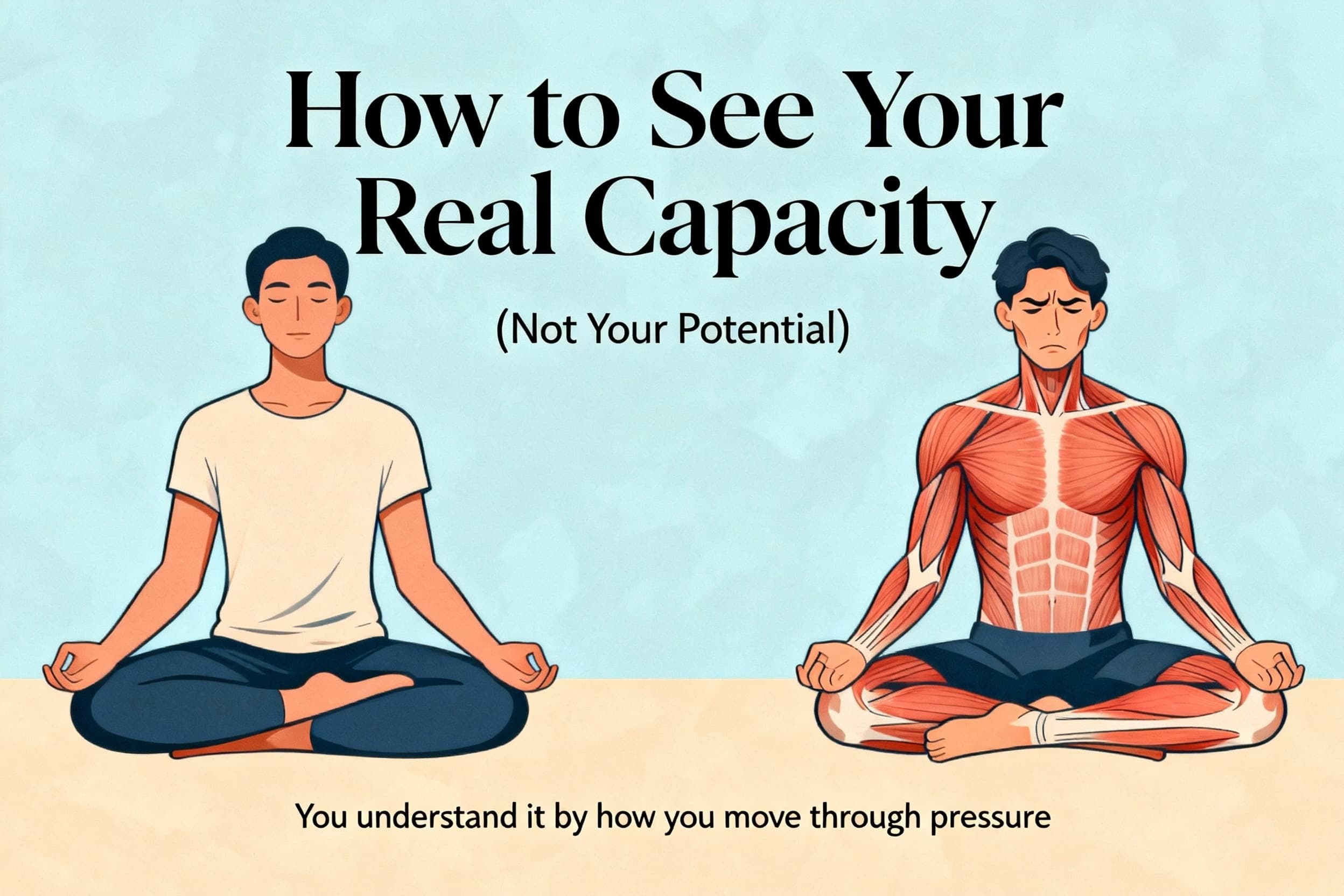
How to See Your Real Capacity
(Not Your Potential)
Many people don’t realize they need mindfulness until they begin noticing how they actually respond to life. Understanding your real capacity helps you better understand your emotions, your patterns, and the way your system moves through the world.
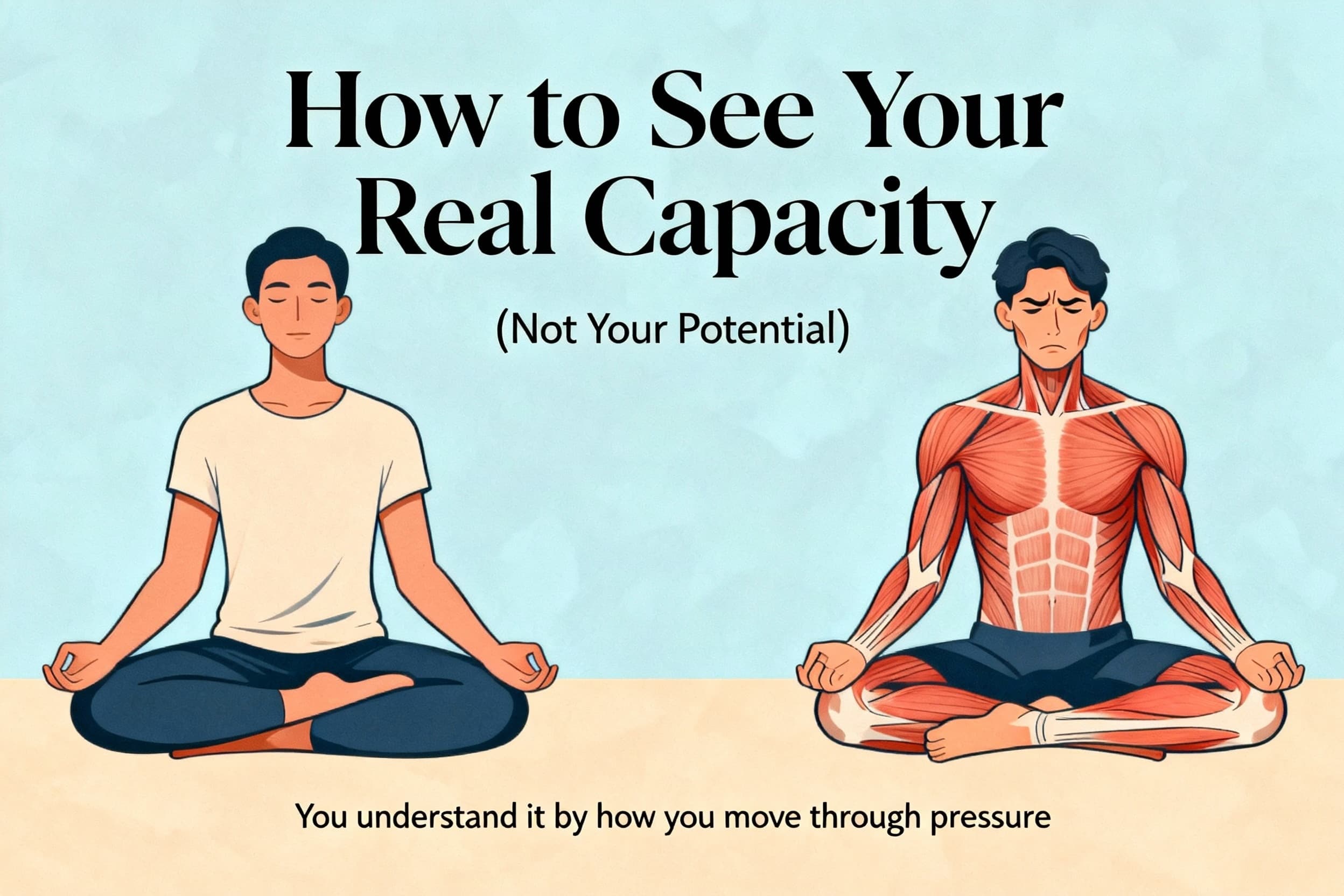
You don't understand your own capacity by how you act in calm moments. You understand it by how you move through pressure.
1. When Plans Change
Watch what your body does first.
Do you get rigid?
Do you adapt?
Do you communicate what you feel instead of making others guess?
Flexibility is a nervous system marker, not a personality trait.
2. When You Feel Discomfort
This is the big one. Your reaction is the truth.
High capacity looks like:
- Curiosity
- Softening
- Staying present
- Asking yourself questions
- Wanting to understand what’s happening inside
Low capacity looks like:
- Defensiveness
- Withdrawal
- Anger
- Blame (self or others)
- Minimization
Your body feels the difference immediately.
3. When You Need Something Simple
Not big things — the small, human things:
- “When I'm juggling a lot, can I ask for something to be taken off my plate?”
- “Can I tell someone I need a better time to talk about this?”
Interest shows up in your willingness to acknowledge your needs.
Capacity shows up in your repeatability. If you can only meet your own needs once in a while, it's not capacity — it's coincidence.
4. When You Are Upset
This is where your real emotional maturity appears.
Do you:
- Name it?
- Own it?
- Regulate it?
- Communicate it?
- Repair after?
Or do you:
- Blame?
- Lash out?
- Get hostile?
- Shut down?
- Disappear from yourself or others?
How you handle your own emotions determines how safe you feel inside your own life.
Real Talk
Capacity isn't about perfection. It’s about how quickly you return to presence, clarity, and repair. That’s what builds internal safety. That’s what builds longevity within yourself.
Yuki Tanaka
Co-founder & Neuroscientist
Former neuroscience researcher who spent six years studying the cortisol response before deciding to build tools instead of papers. Yuki writes about the intersection of ancient philosophy and modern brain science.
Continue Reading
7 Best Cute Meditation Apps in 2026 — CanMindful Tops the List
Looking for an adorable, cozy meditation app? We tested seven of the cutest mindfulness apps in 2026, with CanMindful leading the pack.

Stop Chasing the Snake: Using Meditation to Heal Emotional Bites
**The "Cobra Effect" in psychology describes a common emotional trap: when hurt, we often waste energy obsessing over the source of the pain (chasing the snake) rather than tending to our wounds. This...

Yin-Yang & Five Elements Meditation Meets the Four Elements
If you have ever tried to meditate and found your mind doing parkour, you are not failing. You are just human. These old maps can give your attention something simple to hold—like handing a busy toddl...
New essays, delivered with care.
One thoughtful piece each week. No spam — just ideas worth sitting with.